
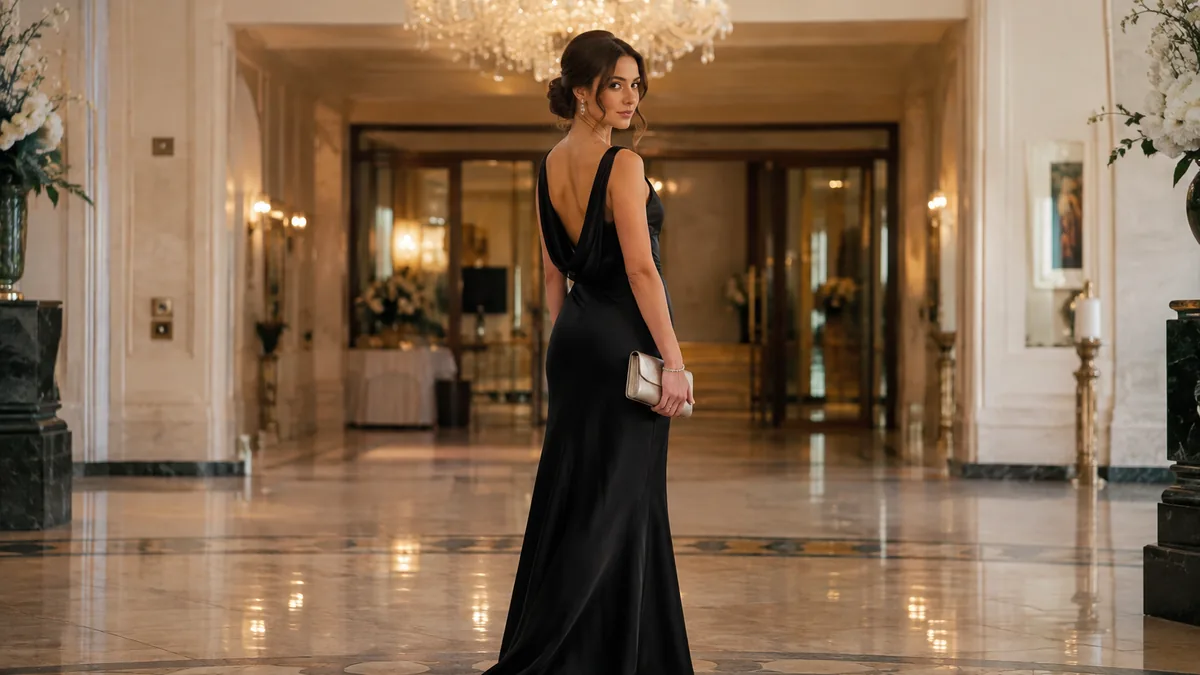
A black tie invitation tells you something about the wedding before you even see the venue: it will be formal, probably in the evening, and the couple has put real thought into the atmosphere. That is exciting, and it is also where many guests start to worry. Is a cocktail dress enough? Can a jumpsuit work? Does the dress have to be black?
Here is the plain version: black tie asks for a floor-length evening gown or an equally formal ensemble. The details below cover what that means in practice. If you are working through several dress codes, our wedding guest dress code guide compares them side by side.
What black tie means for a wedding guest
Black tie is the formal evening standard. Traditionally, men wear tuxedos, and women wear floor-length gowns. For a female guest, that means:
- A long dress, with the hem reaching the ankle or the floor
- A refined fabric and a polished silhouette
- Elegant shoes and accessories
- Hair and makeup that match the formality
The answer to "what does a guest wear to a black tie wedding" is therefore simple on paper: dress as though you were going to a gala. The skill is in the details.
Black tie versus black tie optional versus formal
- Black tie: floor-length gown expected.
- Black tie optional: the hosts prefer formal evening wear but accept a dark suit for men, and for women a floor-length dress or a very elegant midi or tea-length dress.
- Formal or "creative black tie": similar to black tie but allows more color, texture and style, while still leaning long.
When the invitation is unclear, ask the couple or a member of the wedding party. A short message is far better than guessing.
Choosing the dress
Length
Floor-length is the safe default. A hem that just grazes the top of your shoes looks best when you are standing and moving. If you want to wear a midi or tea-length dress, make sure it is clearly formal, made from rich fabric, and that the event is labeled black tie optional rather than strict black tie.
Fabric
The fabric does much of the work in telling people your dress is formal. Good choices include:
- Satin and silk-feel satin
- Crepe with structure
- Chiffon and georgette, which drape and move
- Velvet for colder months
- Lace, tulle or organza overlays for texture
- Beaded or sequined fabric, used with restraint
Avoid casual cotton, jersey, linen and anything that wrinkles heavily. Thin, clingy material that shows seams usually looks less formal.
Silhouette
- A-line or ball-gown shape: classic and flattering for many body types.
- Column or sheath: sleek, modern and easy to move in.
- Mermaid or trumpet: dramatic and eye-catching; make sure you can sit, dance and climb stairs.
- Wrap or draped styles: soft and forgiving.
- Two-piece or gown-style sets: acceptable when they are floor-length and refined.
Necklines and sleeves
Black tie is not a rule against bare shoulders, and it allows strapless gowns and plunging cuts. The usual wedding-guest question is modesty. A plunging neckline or high slit can be elegant but should stay appropriate to the venue and the families involved. A ceremony in a house of worship may call for a wrap, shawl or sleeves.
Colors: the traditional rules, and how strict they are
Everyone knows the main rule: do not wear white, ivory or cream, or anything that could be mistaken for a wedding dress. That includes pale champagne and very light blush in some settings. Beyond that, the old rules are loosening.
- Black: perfectly acceptable at a formal wedding in the evening, as long as it is a gown with texture and detail. Many guests now wear black to formal weddings, and it is no longer considered mourning in most Western settings. If the couple has specified a palette, follow it.
- Jewel tones: emerald, sapphire, ruby, amethyst and deep teal look luxurious and photograph well.
- Deep neutrals: navy, charcoal, wine, forest green and chocolate suit evening events.
- Soft pastels: possible, especially for daytime or spring weddings, but read the invitation.
- Red: fine for most weddings; some cultural traditions have specific preferences, so check.
When in doubt, choose a rich, saturated color. It signals formality without competing with the bride.
Shoes, bags and jewelry
Shoes
You will be on your feet through the ceremony, the photographs and the dancing. Choose an elegant heel, wedge or formal flat. A block heel or a heel with ankle straps stays steady on grass and cobblestone, and a satin or metallic flat is entirely acceptable. A hem that is too long for your heels is a trip hazard, so test the combination at home.
Bags
A small clutch or minaudiere in satin, metallic or beaded material fits black tie. It should hold only the essentials: phone, card, lipstick and a few small items.
Jewelry
Choose one statement element rather than many. If your gown is detailed, wear simple earrings. If the dress is plain, add statement earrings or a bold necklace, but not both.
Wraps and outerwear
A shawl, pashmina or faux-fur wrap is more suitable than a casual jacket. In winter, bring a proper coat and check it at the venue.
What not to wear
- White, ivory and cream
- Short cocktail dresses (unless the invitation says black tie optional and the dress is truly formal)
- Casual maxi dresses made from jersey or cotton
- Jumpsuits that read as daytime or casual
- Very sheer outfits that seem inappropriate for family events
- Anything you can't walk, sit and dance in
Can you rent or reuse a gown?
Many guests choose to rent or borrow a formal gown instead of buying one for a single event. Renting can be a useful option for strict black tie occasions, and wearing a gown you already own to a second wedding is perfectly acceptable too. Keep a little record of what you wore so you do not repeat the look at the same friend group's events.
A planning checklist
- Confirm the dress code and the time of day.
- Check the venue: indoor, outdoor, garden or ballroom.
- Choose the dress and test your movement: sit, climb stairs, dance.
- Book alterations at least a few weeks before the date.
- Pick shoes and break them in.
- Prepare a wrap and a clutch.
- Do a full dress rehearsal with hair and makeup.
For other dress codes
If your invitation reads differently, our semi-formal wedding guest guide and our summer wedding guest dresses page cover lighter formality levels, and the garden party dress code page helps with outdoor receptions.
FAQ
What should a female guest wear to a black tie wedding?
A floor-length evening gown or an equally formal long dress, with polished shoes, a clutch and refined jewelry. Avoid white and ivory.
What does black tie mean for a wedding guest?
It means the event is formal and usually in the evening. Men typically wear tuxedos, and women wear floor-length gowns or similarly formal outfits.
Can I wear black to a black tie wedding?
Yes, in most cases. Choose a formal gown in an elegant fabric. If the couple has asked for a color palette or the family has specific traditions, follow those.
Can I wear a short dress to a black tie wedding?
Usually not. A floor-length dress is expected. A very formal midi or tea-length dress may be acceptable if the invitation says black tie optional.
Where should I buy a black tie wedding guest dress?
Department stores, specialty formalwear shops, online retailers and rental services all carry gowns. Order early so there is time for returns and alterations.