
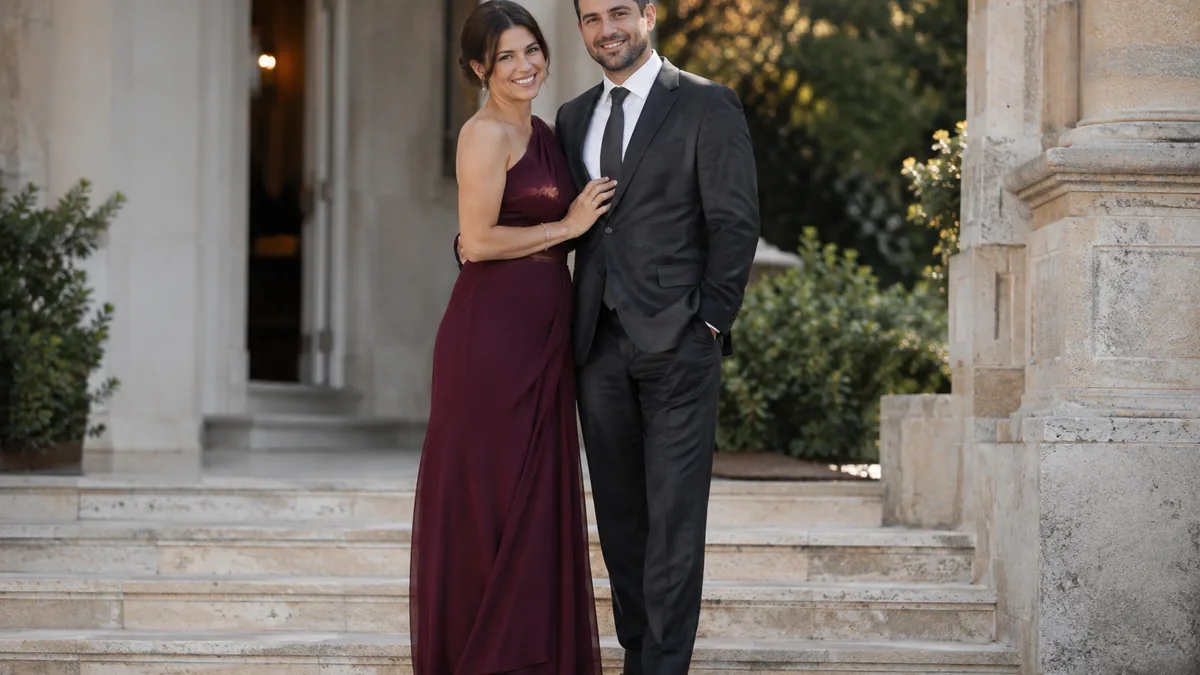
"Formal" is one of the most common words on a wedding invitation, and one of the most confusing. Does it mean a floor-length gown? A tuxedo? Can you wear a knee-length dress? This guide explains what formal wedding attire means in everyday terms, what women and men usually wear, and how to read the other dress codes that appear next to it.
The short version: formal means dressed up and polished, usually in the evening or in an elegant venue, but not as ceremonial as black tie. If your invitation says black tie, read our black tie wedding guest dress guide. If it says semi-formal, our semi-formal wedding guest dress guide is the better fit.
What formal wedding attire means
Dress codes have no single official rulebook, so the meaning shifts a little by region, venue and couple. In practice, formal wedding attire is read like this:
- For women: a long dress, a very elegant midi dress, or a dressy jumpsuit in a refined fabric such as satin, crepe, chiffon or velvet. Think "evening event."
- For men: a dark suit and tie is the baseline, and a tuxedo is also acceptable. Leather dress shoes and a matching belt finish the look.
- For everyone: clean, pressed clothes, polished shoes and accessories that look intentional rather than casual.
The best clue is the invitation itself. A hotel ballroom, an evening ceremony or a couple who wrote "formal" in capital letters all point toward the dressier end of the range. A daytime ceremony at a garden or winery usually allows a little more ease.
Formal compared with nearby dress codes
Putting the codes side by side makes the choice easier.
| Dress code | General feel | Typical women's look | Typical men's look |
|---|---|---|---|
| Black tie | Most ceremonial | Floor-length gown | Tuxedo and bow tie |
| Formal | Dressy and polished | Long or very elegant midi dress | Dark suit and tie, or a tuxedo |
| Semi-formal | Polished but relaxed | Cocktail or midi dress | Suit, tie optional in some settings |
| Cocktail | Party-ready | Cocktail dress or dressy separates | Suit and dress shirt |
| Dressy casual | Neat, not formal | Nice dress or separates | Blazer and trousers |
Hosts do not always use these words in the same way, which is why a quick check with the couple's website or a friend in the wedding party helps. For a closer look at one neighbor on this ladder, see our cocktail attire guide.
What to wear: women
A formal wedding gives you room to enjoy a more dramatic outfit. A few reliable directions:
- A floor-length dress in a solid color. A fluid column dress, an A-line gown or a wrap-style long dress all read as formal without being overdone.
- An elegant midi dress. A midi that falls below the knee in satin, crepe or a structured fabric works for many evening weddings, especially with heels and statement earrings.
- A dressy jumpsuit. Choose a wide-leg style in a fabric with some weight and drape, and finish it with heels and a clutch.
- A two-piece set. A tailored top with a long skirt in a matching fabric looks deliberate and often photographs well.
Color: jewel tones such as emerald, sapphire, burgundy and deep plum are easy to wear in cooler months, while soft sage, dusty blue and terracotta suit warmer ones. Black is usually fine for an evening formal wedding when styled with interesting texture or jewelry. The common etiquette points are to avoid white, ivory and cream, and to skip anything the couple has asked guests not to wear.
Shoes and bags: heeled sandals, pumps or elegant flats all work. If the ceremony is on grass, block heels or wedges are easier to walk in than thin stilettos. A small clutch is more in keeping than a large everyday tote.
What to wear: men
For men, formal wedding attire keeps the rules simple. Wear a suit in navy, charcoal or black with a crisp dress shirt, a tie or bow tie, a belt that matches the shoes and leather dress shoes. A tuxedo is appropriate if the couple or the venue clearly sets a formal evening tone, but it is not required unless the invitation says black tie. Pocket squares, cufflinks and a well-pressed jacket add polish without effort.
Adjusting for the season and the venue
- Winter: velvet, heavier crepe and long sleeves feel natural. Bring a wrap, a tailored coat or a faux-fur stole for outdoor moments.
- Summer: choose lighter formal fabrics such as chiffon or lightweight satin, and consider a lighter suit color for a daytime ceremony.
- Outdoor venues: think about the ground. Choose shoes that will not sink into grass or catch on gravel.
- Religious ceremonies: if the ceremony has modesty customs, carry a shawl or choose a dress with sleeves, then remove the layer later if you wish.
- Destination weddings: check the climate and pack fabrics that resist wrinkles.
Common mistakes to avoid
- Dressing too casually. Knee-length casual dresses, denim and sneakers rarely fit a formal invitation.
- Wearing white or near-white. This is the one rule almost every guide agrees on.
- Ignoring fit and fabric. A well-fitted dress in a good fabric looks formal; a loose, thin one does not.
- Choosing shoes you cannot walk in. You will be standing, walking and probably dancing for hours.
- Forgetting the weather. A formal outfit that leaves you freezing or overheated is not much fun.
A quick checklist
Before you leave, ask yourself: is it at least a step dressier than what I would wear to a nice dinner, does it avoid white and the couple's no-go colors, are my shoes comfortable enough for the whole evening, and do I have a layer for the weather? If yes, you are dressed correctly for almost any formal wedding.
FAQ
What is formal wedding attire?
Formal wedding attire means dressed-up, polished clothing for an elegant event. Women usually wear a long dress or a very elegant midi dress or jumpsuit, and men wear a dark suit and tie or a tuxedo. It is less ceremonial than black tie.
Is formal the same as black tie?
No. Black tie is the most ceremonial dress code and usually means a floor-length gown and a tuxedo. Formal is slightly more flexible, so a dark suit and an elegant midi dress are often acceptable.
Can I wear a short dress to a formal wedding?
It is safest to avoid a short, casual dress. A refined knee-length or midi dress in a dressy fabric can work at some formal weddings, but a long dress is the more reliable choice.
Can I wear black to a formal wedding?
Usually yes, especially for an evening wedding. Add texture, interesting jewelry or a colorful accessory so the look feels celebratory. Check the invitation in case the couple has asked for a specific palette.
What should men wear to a formal wedding?
A dark suit with a dress shirt, tie, leather dress shoes and a matching belt is the standard. A tuxedo is also appropriate if the venue and timing are clearly formal.