
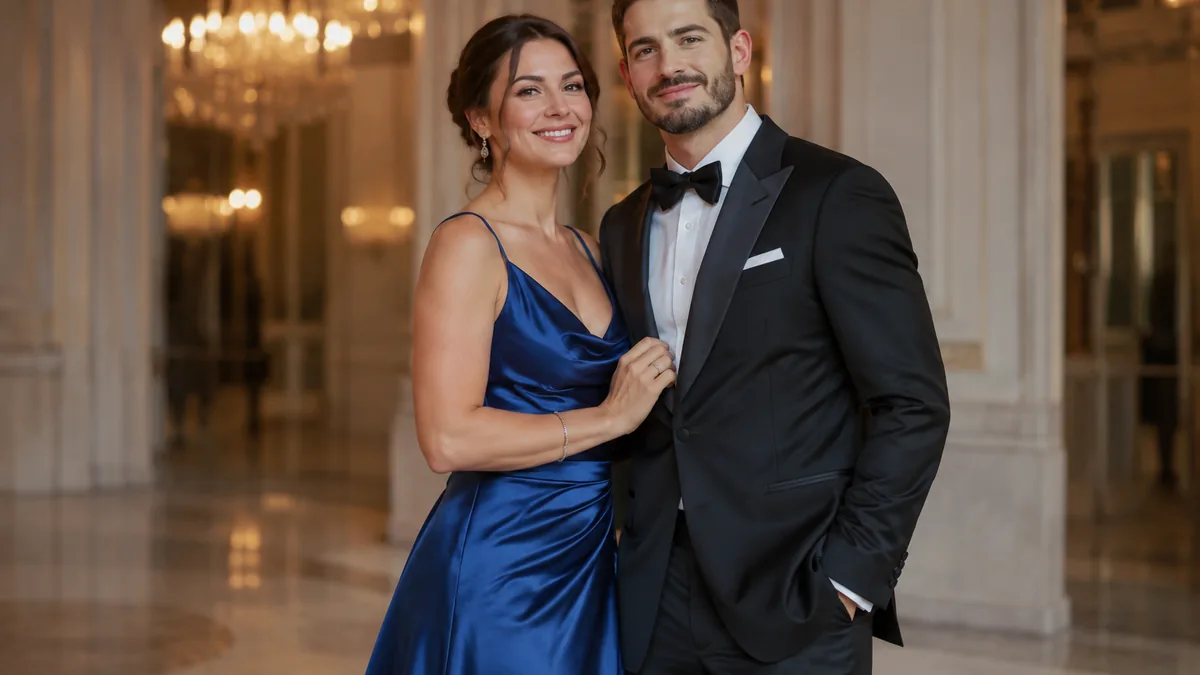
"Black tie" on an invitation is the moment many people stop and search for help. It is the dress code that sits just below white tie, the most formal of all, and it signals an evening event with real ceremony: a gala, a formal wedding, an awards dinner or a charity ball. This guide explains what black tie attire means, what women and men usually wear, how it differs from nearby dress codes, and how to avoid the common mistakes.
If your invitation is for a wedding, our black tie wedding guest dress guide goes deeper on colors and wedding etiquette. This page covers the dress code as a whole.
What black tie attire means
Black tie is a formal evening dress code. It takes its name from the black bow tie worn with a tuxedo, and the whole standard is built around that outfit. For men, the expected look is a tuxedo (also called a dinner jacket). For women, the equivalent is an elegant evening gown, usually floor-length, although a very refined alternative is generally accepted.
A few points are worth knowing:
- It is an evening dress code. Black tie is traditionally worn after about 6 p.m. Daytime events rarely use it.
- It is a signal about the whole event. If the host asks for black tie, you can usually expect a seated dinner, speeches or music, and a formal venue.
- Hosts can adjust it. Some invitations say "black tie optional" or "creative black tie," which loosen the rule. Always read the exact wording, and when in doubt, ask the host.
Black tie dress for women
The classic answer is a floor-length gown. It does not have to be a ball gown or a wedding-style dress; sleek column dresses are just as correct.
Length and silhouette
- Floor-length is the safest choice. The hem should skim the top of your shoes when you stand.
- A-line, column, wrap or mermaid shapes all work. Choose one you can walk, sit and climb stairs in.
- Tea-length or midi dresses are sometimes seen, but they read as less formal. Wear one only if the host or the venue suggests a relaxed take on black tie.
Fabric and details
Fabric is what makes a dress look formal. Satin, silk, structured crepe, velvet, chiffon and well-made lace all signal evening wear. Beading and sequins can work if they are used with restraint. Avoid casual cotton, jersey, linen or anything that creases heavily, since those fabrics look daytime even in a long cut.
Elevated alternatives
If you do not want a gown, a few options are usually accepted at a modern event:
- A formal jumpsuit in a fluid fabric with a clean line.
- A dressy two-piece set with a long, full skirt and a refined top.
- Elegant tailored evening trousers with a silk or embellished top, worn with heels and statement jewelry.
Treat these as the exception rather than the default, and keep everything polished: pressed fabric, good tailoring, and no casual details.
Colors
There is no single required color. Black, navy, deep jewel tones (emerald, sapphire, ruby) and rich neutrals all look appropriate in the evening. At weddings, avoid white, ivory and cream so you do not compete with the bride.
Shoes, bags and jewelry
- Shoes: heeled sandals, pumps or elegant flats in satin, metallic or leather. Keep sneakers, flip-flops and casual wedges for another day.
- Bag: a small clutch or evening bag that holds a phone, a lipstick and a card.
- Jewelry: one focal point works best. Statement earrings with a simple neckline, or a necklace with an open neckline, look balanced.
- Wrap: a shawl, a stole or a tailored coat for cool venues and for the arrival and exit.
Black tie dress code for men
The traditional outfit is simple and has few moving parts:
- A black or midnight-blue tuxedo jacket, usually with satin or grosgrain lapels.
- Matching trousers with a stripe of satin or grosgrain down the side seam.
- A white dress shirt, often with a fold-down collar or a wing collar.
- A black bow tie, self-tied if possible.
- A waistcoat or cummerbund if you want to cover the waistband.
- Black dress shoes, polished leather or patent leather.
A regular business suit with a dark tie is not black tie, even if it is a very good one. If you do not own a tuxedo, renting one is common and perfectly acceptable. Fit matters more than brand: sleeves that end at the wrist bone and trousers that break neatly on the shoe will make a rented tuxedo look tailored.
How black tie differs from other dress codes
Dress codes get confusing because the names sound alike. Here is a simple ladder from most to least formal.
- White tie: the most formal level. Women wear a full-length ball gown; men wear a tailcoat, a white bow tie and a white waistcoat. It is rare today and mostly appears at state occasions and a few traditional balls.
- Black tie: the tuxedo and gown standard described above.
- Black tie optional: the host prefers black tie but understands if guests wear something slightly less formal. Men can wear a tuxedo or a dark formal suit; women can wear a floor-length gown or a very elegant cocktail dress.
- Formal or evening formal: a dark suit and tie for men, and a long dress or an elegant dressy dress for women.
- Cocktail attire: knee-length or midi dresses and suits. See our cocktail attire guide.
- Semi-formal: a step below cocktail in some regions, and a near-synonym in others. Our semi-formal attire guide explains the overlap.
These labels are guidelines rather than laws, and local customs vary. When two guides give different answers, the invitation and the host win.
What to avoid at a black tie event
- Anything that looks like daywear: sundresses, casual maxis, denim or cotton.
- Short or very casual dresses, unless the invitation says otherwise.
- White or ivory at a wedding.
- Wrinkled or visibly worn fabric. Steam a gown the day before.
- Overloaded accessories. A strong dress needs less jewelry, not more.
- Shoes you cannot walk in. A long evening means standing, dancing and stairs.
Planning checklist
- Read the invitation twice for words such as "optional" or "creative."
- Confirm the time of day and the venue; an outdoor or garden venue may call for a lighter fabric. Our garden party dress code guide can help with that kind of setting.
- Try on your full outfit, including shoes, a week before.
- Check that you can sit, dance and raise your arms comfortably.
- Prepare a wrap or coat for the weather and the car ride.
FAQ
What is black tie attire?
Black tie is a formal evening dress code. Men wear a tuxedo with a bow tie, and women wear a floor-length evening gown or an equally refined alternative.
Can women wear a short dress to a black tie event?
A short dress is generally less appropriate, because the standard is floor-length. A very elegant midi or tea-length dress is sometimes accepted at "black tie optional" events. If you are unsure, choose a longer hem or ask the host.
What is the difference between black tie and black tie optional?
Black tie expects a tuxedo and a gown. Black tie optional lets guests choose a tuxedo or a dark formal suit, and a gown or a very elegant cocktail dress, so there is more flexibility.
Can I wear black to a black tie event?
Yes. Black is a classic choice for evening wear. At a wedding, black is now widely accepted if the dress has texture and detail and does not look somber.
Do I need a tuxedo for black tie?
A tuxedo is the traditional outfit for men. If you do not own one, renting a tuxedo is common. A regular business suit usually does not meet black tie.