
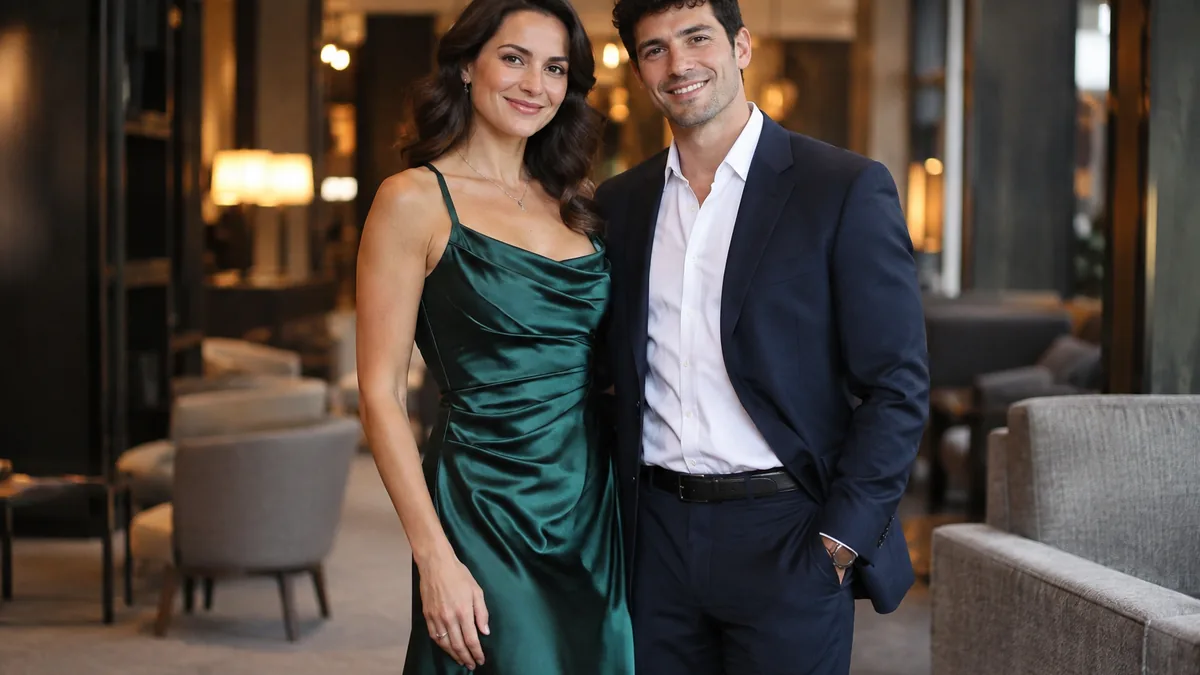
Few invitations cause as much second-guessing as the two words "semi-formal." It is not black tie, and it is clearly not jeans and a nice top. This guide explains what semi-formal attire means in everyday terms, what to wear for different kinds of events, and how to adjust for the season, the venue and the time of day.
Semi-formal sits in the middle of the dress-code ladder. Dressier than business casual, less ceremonial than black tie. If you are dressing for a wedding specifically, our guide to the semi-formal wedding guest dress goes deeper on that one occasion. This page covers the general rule.
What semi-formal attire means
The simplest way to think about it: semi-formal says "put in real effort, but you do not need a gown or a tuxedo." The clothes should look intentional and polished, with fabrics that feel a step above everyday wear.
- For women: a cocktail dress, a midi dress in a refined fabric, an elegant long dress that is not a ballgown, a dressy jumpsuit, or a tailored top with a skirt or trousers in a dressy material.
- For men: a suit and tie in a dark or mid-tone color, a dress shirt, leather dress shoes and a belt that matches the shoes. A tuxedo is not expected.
- For everyone: clean, pressed clothes, shoes that are not sneakers, and accessories that look finished rather than casual.
Hosts often use "semi-formal" and "cocktail attire" almost interchangeably. If you are not sure which one you are dealing with, read our guide to cocktail attire, since the two overlap heavily.
How it compares with nearby dress codes
Dress codes are easier to understand when you place them side by side.
| Dress code | General feel | Typical outfit for women |
|---|---|---|
| Casual | Everyday comfort | Jeans, sundress, sneakers |
| Business casual | Office-ready | Blouse, tailored trousers, loafers |
| Dressy casual | A little more polished | Nice separates, a casual dress, heeled sandals |
| Semi-formal | Polished and intentional | Cocktail or midi dress, dressy jumpsuit |
| Black tie optional | Quite formal | Floor-length dress or a very elegant cocktail dress |
| Black tie | Formal evening | Floor-length gown, see our black tie guide |
If an invitation says "formal" without further detail, treat it as one step above semi-formal and lean toward a longer hemline and richer fabrics.
What to wear: women
Dresses
A dress is the most straightforward semi-formal answer. Knee-length, just-below-the-knee and midi hemlines all work. What matters more than length is the fabric and the cut. Satin, crepe, chiffon, velvet and fine-knit fabrics look dressy; thin jersey, casual cotton and anything stretchy and clingy in a sporty way read as too relaxed.
A long dress is fine too, as long as it feels like an evening or occasion dress rather than a beach maxi. A column or A-line silhouette with a simple neckline is a safe choice.
Jumpsuits and separates
A jumpsuit in a fluid fabric, with a defined waist and a clean neckline, is a perfectly good semi-formal option. So is a set of separates: a silky camisole or a structured top with a midi skirt or wide-leg trousers in a matching dressy material. The test is whether the pieces look like they belong together at a dinner, not at an office desk.
Colors and prints
There is no color rule beyond common sense. Jewel tones, deep neutrals, navy, black, burgundy and soft pastels all work. Black is fine for most semi-formal events; just add some interest through texture or accessories. For weddings, avoid white and ivory unless the couple has said otherwise. Bold prints are acceptable if the fabric and cut still look dressy.
Shoes, bags and jewelry
- Heeled sandals, pumps, dressy flats, kitten heels and block heels all work. Comfort counts, because semi-formal events often involve standing and dancing.
- A small clutch or structured mini bag looks more polished than a large everyday tote.
- Jewelry can be simple. One statement piece, such as earrings or a necklace, is usually enough.
What to wear: men
A dark suit is the default. Navy, charcoal and black are the safest; mid-gray or a deeper tone of green or brown can work in the right season. Pair it with a dress shirt in white or a light color, a tie or a formal alternative if the event leans modern, and leather dress shoes in black or brown that match the belt.
Details matter more than people expect: a well-fitting jacket, ironed shirt, polished shoes and a neat tie knot make an ordinary suit look right. At a daytime event a lighter color suit is fine. In the evening, darker tones feel more appropriate.
Adjusting for the season and the venue
Time of day
Daytime semi-formal events tend to be lighter in color and fabric. Evening events lean darker and richer. A pastel midi dress works at an afternoon garden gathering. The same event in the evening, in a ballroom, might call for deeper colors and a more structured look.
Weather
- Winter: velvet, heavier crepe and long sleeves look appropriate. A tailored coat or a wrap is better than a puffer jacket if you want to keep the look polished.
- Summer: light satin, linen blends in a refined weave and open-toe shoes keep you comfortable. Avoid fabrics that wrinkle badly.
- Outdoor venues: choose block heels or flats if the ground is grass or gravel.
The event itself
Semi-formal covers a lot of situations: a restaurant dinner for a milestone, a graduation ceremony, a holiday office party, an awards evening, a christening or an engagement party. A good rule is to look at who is hosting and where. A hotel ballroom asks for more formality than a rented barn. When in doubt, ask the host or a friend who is also attending, and follow the invitation wording.
Common mistakes to avoid
- Going too casual. Sneakers, denim and casual cotton tees rarely fit a semi-formal invitation.
- Going too formal. A floor-length sequined gown can feel out of place at a semi-formal lunch. Dressing one step above the room is fine; dressing three steps above is not.
- Ignoring the fabric. The same style in a shiny, structured fabric and in a thin jersey look like different dress codes.
- Forgetting the fit. A modest off-the-rack outfit that fits well beats an expensive one that does not.
- Overlooking comfort. If you cannot sit, walk or dance in your shoes, you will not enjoy the event.
A simple checklist before you leave
Check these points: is the outfit clean and pressed, does it feel dressier than what you would wear to the office, are the shoes appropriate, and do you have a layer for the weather? If the answer is yes to all four, you are dressed correctly for most semi-formal occasions.
FAQ
What does semi-formal attire mean?
It means polished, intentional clothing that is dressier than business casual but less formal than black tie. For women that is usually a cocktail or midi dress, a dressy jumpsuit or elegant separates. For men it is a suit and tie with leather dress shoes.
Can I wear black to a semi-formal event?
Yes, in most cases. Black is a standard choice for evening events. Add texture, a colorful accessory or interesting jewelry if you want it to feel less severe. The exception is when a host asks for a specific palette or the event has cultural expectations about black.
Is semi-formal the same as cocktail attire?
They are very close and often used interchangeably. Cocktail attire tends to be slightly more party-oriented and is most associated with evening events, while semi-formal can also describe daytime ceremonies and dinners.
Can I wear a jumpsuit or pantsuit to a semi-formal event?
Yes. A jumpsuit in a fluid dressy fabric or a tailored suit set looks appropriate, as long as the fabric, cut and shoes match the level of formality.
Do I need a full-length dress for a semi-formal event?
No. Knee-length, midi and long dresses are all acceptable. A floor-length gown is more typical of black tie or formal invitations.